
Plastic-Free Electric Kettle: Glass vs Stainless Steel vs Titanium
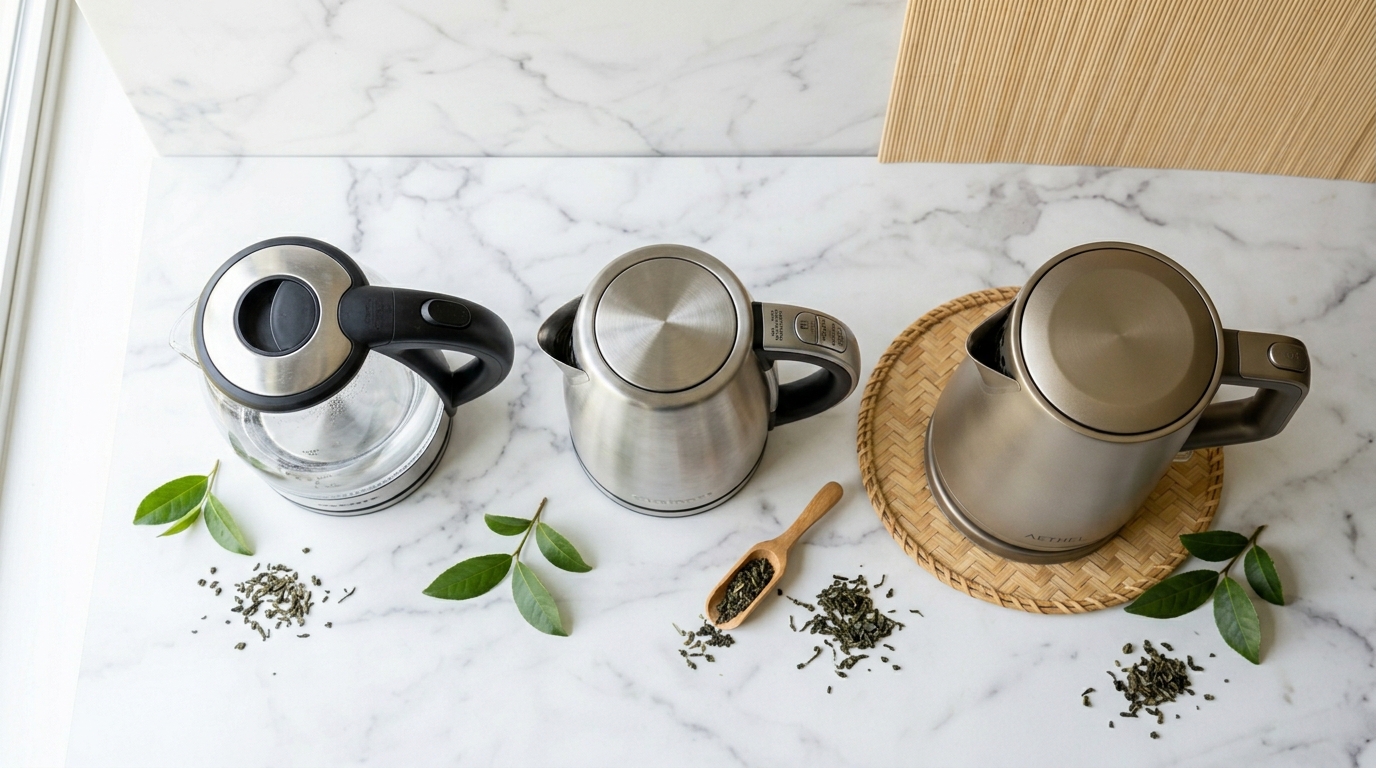
Why Go Plastic-Free?
If you've ever boiled water in a cheap electric kettle and noticed a faint chemical smell, you're not alone. Most mass-market electric kettles use polypropylene (PP) or polycarbonate (PC) plastics for the body, lid, or water window. When heated repeatedly to 100°C, these plastics can leach BPA, BPS, and microplastics into your drinking water.
A 2020 study published in Environmental Science & Technology found that a single plastic kettle can release over 10 billion microplastic particles per liter after just 3 minutes of boiling. That's why health-conscious consumers are actively searching for a plastic-free electric kettle — one where no plastic ever touches the water.
"The question isn't whether plastic leaches into hot water — it's how much."
— Environmental Health Perspectives, 2019
The 3 Plastic-Free Options Compared
When shopping for a truly plastic-free electric kettle, you have three main material choices. Here's how they stack up:
| Feature | 🔍 Glass | 🔩 Stainless Steel (304) | 🏆 Pure Titanium (TA1) |
|---|---|---|---|
| Plastic-free? | ⚠️ Partially — lid/base often plastic | ⚠️ Partially — lid gasket often silicone/plastic | ✅ 100% — full titanium contact |
| Weight | Heavy (fragile) | Medium | 43% lighter than steel |
| Metal leaching | ✅ None (glass) | ⚠️ Trace chromium & nickel | ✅ Zero — chemically inert |
| Taste neutrality | ✅ Excellent | ⚠️ Slight metallic aftertaste | ✅ Perfect — zero taste transfer |
| Durability | ❌ Fragile — thermal shock risk | ✅ Durable | ✅ Strongest — corrosion-proof |
| Travel-friendly? | ❌ Too fragile & heavy | ⚠️ Acceptable | ✅ Ultra-light, perfect for travel |
| Antibacterial surface | ❌ No | ❌ No | ✅ TiO₂ oxide layer |
| Price range | $25–$45 | $30–$60 | $79–$90 |
Glass Electric Kettles: Transparent but Fragile
Glass kettles look beautiful and don't impart any taste. However, they have significant drawbacks as a plastic-free electric kettle:
- Hidden plastic: Most "glass" kettles still use plastic lids, plastic water level windows, or plastic base connectors. The water contacts plastic every time you pour.
- Thermal shock: Borosilicate glass can crack from rapid temperature changes — especially dangerous with boiling water.
- Not travel-safe: Glass is heavy and fragile, making it impractical for travel, RVs, or hotel use.
- Limescale visibility: While transparency lets you see buildup (a nice feature), it also means constant cleaning to maintain appearance.
Stainless Steel Kettles: Better, But Not Perfect
304 stainless steel is a major upgrade over plastic, and it's the most common "premium" kettle material. But it has hidden issues:
- Nickel & chromium leaching: When boiling acidic or mineral-rich water, trace amounts of heavy metals can leach from 304 steel. People with nickel allergies (affecting ~15% of women) are particularly at risk.
- Metallic aftertaste: Many users report a faint metallic taste, especially in new stainless steel kettles or when boiling water for tea.
- Silicone gaskets: The lid often contains silicone or rubber seals that contact steam and condensation — technically making it not 100% plastic-free.
Pure Titanium: The True Plastic-Free Champion
Grade 1 Pure Titanium (TA1) is the only material that solves every problem with traditional electric kettles:
Zero Chemical Leaching
Titanium is chemically inert — it doesn't react with water, acids, or alkalis at any temperature. Zero BPA, zero microplastics, zero heavy metals. Period.
Perfect Taste Neutrality
Professional tea sommeliers use titanium cups because they impart absolutely zero flavor. Your water and tea taste exactly as they should.
Travel-Ready
At 43% lighter than steel, a titanium travel electric kettle weighs less than a water bottle. Perfect for business trips, hotels, and RV adventures.
Medical-Grade Safety
The same material used in dental implants and surgical instruments. Your body — and your water — couldn't be in safer contact.
Our Recommendation
If you're serious about eliminating plastic and chemical exposure from your daily water intake, a pure titanium electric kettle is the definitive answer. Here are our top picks:
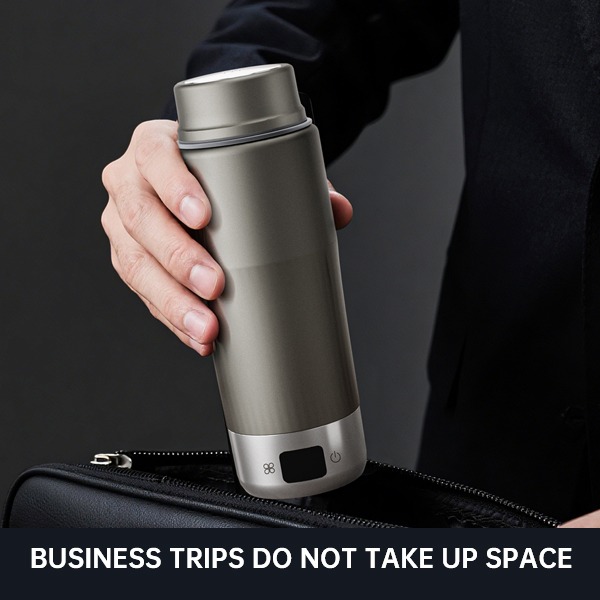
Pure Titanium Mini Travel Electric Kettle 520ML
Global voltage 100–220V, 300W fast boil, 8-hour constant temperature, 12-level temp control. The ultimate plastic-free travel companion.
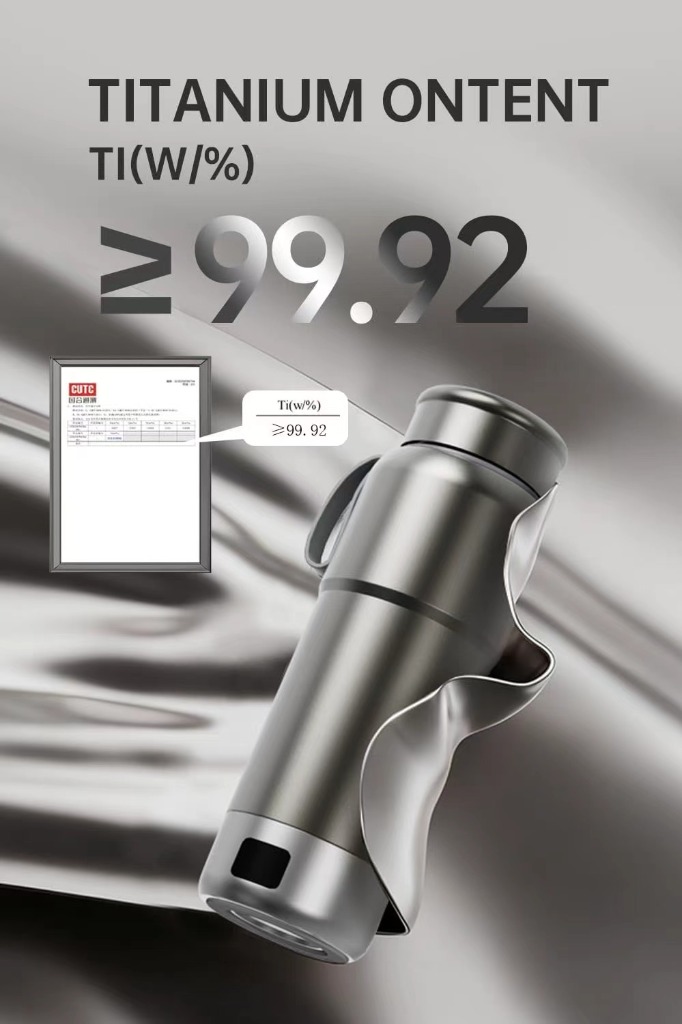
Pure Titanium Mini Travel Electric Kettle 380ML
Compact 380ml capacity with multiple brewing modes. Perfect for tea lovers who refuse to compromise on purity.
FAQ: Plastic-Free Electric Kettles
Are glass electric kettles truly plastic-free?
Usually not. While the body is glass, most models use plastic lids, spouts, or internal components that contact water or steam. Always check every component that touches liquid.
Does stainless steel leach into boiling water?
Yes, in trace amounts. 304 stainless steel contains 8–10% nickel and 18–20% chromium. Under repeated boiling cycles, especially with hard water, measurable amounts can leach. This is generally within safe limits but not ideal for sensitive individuals.
Why is titanium more expensive?
TA1 pure titanium costs 5–8x more than 304 stainless steel as a raw material. The machining process is also more complex — titanium is notoriously difficult to work with, requiring specialized tools. The result, however, is a product that will last decades without any degradation.
Can I use a titanium kettle for travel?
Absolutely — that's one of its biggest advantages. Our 520ML Travel Electric Kettle supports 100–220V global voltage, weighs under 500g, and fits in a carry-on. It's the definitive travel electric kettle for health-conscious travelers.
The Bottom Line
If you're searching for a truly plastic-free electric kettle, skip the glass and stainless steel compromises. Pure titanium is the only material that guarantees zero chemical leaching, zero taste interference, and a lifetime of safe use. Explore Our Titanium Kettles →